
In the past, the only solution to lost teeth were false teeth that you would take out at night and clean. These are still an option, but the main problem with this approach is that they can be uncomfortable and they can move in certain circumstances. As an alternative, a dental implant can reduce full dentition functionality and you can smile confidently. However, before you can make a decision, you need to understand the full dental implant procedure from start to finish.

A Brief Dental Implant Primer
A dental implant surgery replaces the tooth roots with a metal post and the damaged teeth with an artificial model. The teeth look and work just like regular teeth and they are screwed into place onto the posts.
Dental surgery is a sound choice if there are insufficient natural teeth roots to build bridgework or support dentures. The condition of the jawbone and the type of dental implant required will determine the surgical procedure.
There may be several procedures to remove old roots and clean the gum to prepare the jawbone for the metal post. This is important to ensure that the bone will heal around the dental implant. Bone healing can take a long time so the entire process can take months and require multiple visits to complete.
Dental Implant vs Alternatives
| Option | Description | Pros | Cons |
|---|---|---|---|
| Dental Implants | Titanium posts surgically placed in the jawbone to replace missing teeth. | – Long-lasting (15+ years) – Natural look & function – Prevents bone loss | – Expensive – Requires surgery – Healing time (3-6 months) |
| Fixed Dental Bridge | Artificial teeth anchored to adjacent natural teeth. | – Less invasive than implants – Looks natural – Faster procedure | – Requires altering healthy teeth – Can lead to decay under the bridge |
| Removable Dentures | Artificial teeth in a removable frame (partial or full). | – Affordable – Non-invasive – Quick solution | – Can shift while eating/talking – Requires regular maintenance |
| Snap-In Dentures | Dentures secured by implants but still removable. | – More stable than traditional dentures – Prevents slipping | – Requires implant surgery – Higher cost than regular dentures |
| Resin-Bonded Bridge (Maryland Bridge) | Metal or porcelain wings bond the artificial tooth to adjacent teeth. | – No major alteration to adjacent teeth – Less invasive | – Less durable – Not suitable for molars |
| All-on-4 Implants | Four implants support a full arch of teeth. | – Permanent and stable – Prevents bone loss – Faster recovery than individual implants | – Expensive – Requires surgery |
Why Use a Dental Implant?
A dental implant is surgically installed in the jawbone where it serves the same function as the roots of teeth that have been lost. The metal post is made with titanium that actually fuses with the jawbone.
An implant won’t slip out of place or cause unwanted noises when you eat and drink. There is virtually no risk of bone damage that can be caused by dentures and fixed bridgework. The materials used in a dental implant will not decay like a natural tooth which is an excellent way to stabilize dental health. Here are some reasons why a dental implant may the right choice for you.
- You have sufficient bone to secure an implant or a bone graft is possible.
- Your jawbone has reached full growth.
- You don’t smoke.
- The tissues in your mouth are healthy.
- You have one or more missing teeth.
- You can’t or won’t wear dentures.
- You’re willing to be patient for several months.
- You need to improve your speech.
- You don’t have a health condition that affects bone healing.
Given the advantages of dental implants it’s natural to wonder why anyone would choose dentures or bridgework instead. But, nothing is perfect and like any surgery, there are certain health risks associated with dental implant surgery. The risks are minor and usually they are simple to treat, but you need to fully understand them before you make your final decision.
- Nerve damage can occur which may cause tingling, numbness or pain in your lips, chin, gums or nearby natural teeth.
- There could be an infection at the implant site.
- There is a risk of injury to your other teeth and blood vessels.
- A dental implant in the upper jaw could cause sinus problems in the sinus cavities.
Again, this sounds terrible, but when these rare health issues arise they can be fixed with good aftercare, healing time and appropriate medications.
7 Steps to Get a Dental Implant
There are seven steps in the process to get a dental implant and each step may take a while to complete before you can move on to the next step.
Step 1: The Consultation and Planning Process
The starting point is a consultation with your doctor, you will have an exam and they will look into our medical history. There may be 3D images or X-rays to check the viability of a dental implant for you. If this is a viable approach a treatment plan will be prepared and the doctor will go over this with you.
If the tooth is damaged, it will need to be removed before you can get a dental implant. This is a simple procedure, but the gum will need at least a few weeks to heal before surgery is possible. The doctor will give you clear instructions on how to prevent infection problems that could further delay the dental implant procedure.
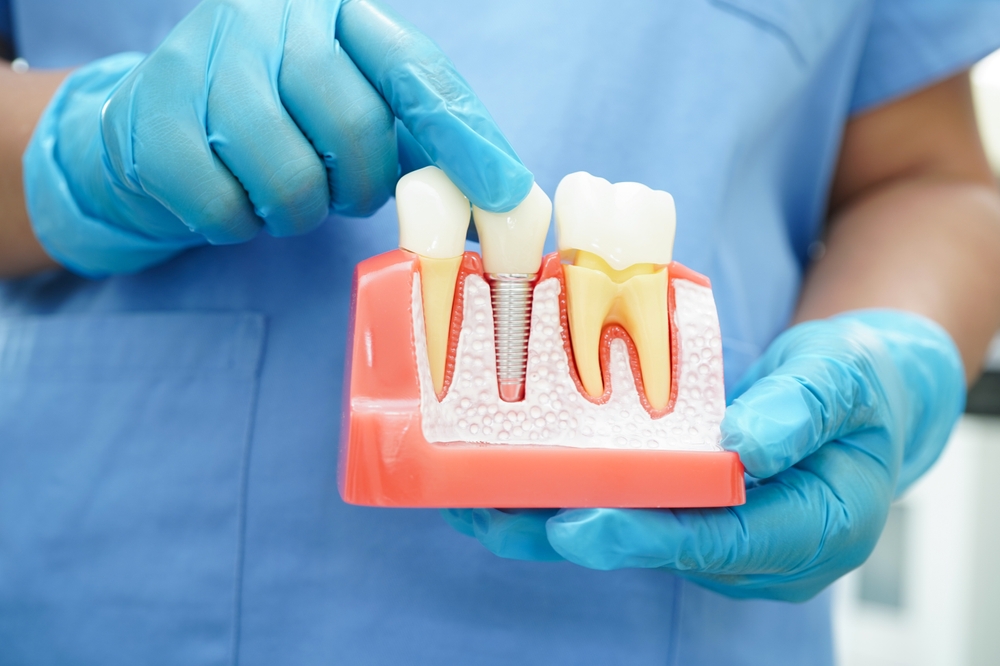
During the dental implant planning process there may be a number of specialist involved.
- The Periodontist: This is a dentist that specializes in treating gums and bones that support teeth.
- An ENT Specialist: This is an ear, nose and throat specialist.
- An Oral and Maxillofacial surgeon: This is a healthcare professional that treats jaw, mouth and facial conditions.
- The Prosthodontist: This is a dentist that designs and fits artificial teeth.
Step 2: Preparing for the Dental Implant Procedure
A dental implant will require one or more surgical procedure, to prepare you for this process you will go through the following stages.
- Evaluating the Dental Exam Results: After the 3D images or X-rays have been taken there may be models made of your teeth and jaw.
- The Medical History: Your healthcare professional will review any medicines you take and any medical conditions that you have. If you have bone or joint implants or a heart condition you may need a course of antibiotics prior to surgery,
- The Treatment Plan: This plan is specific to you, it will show how many dental implants you need, your jawbone condition and the position and health of your remaining teeth.
Pain Management Options
Before the dental implant surgery you will be presented with a number of anesthesia options for pain management during the procedure.
- Local anesthesia will numb the area that’s worked on.
- Sedation is available for nervous patients that need to feel calmer during treatment.
- General anesthesia will place you in a sleep-like state for the duration of the surgery.
The type of anesthesia you choose will determine how you can eat and drink before your surgery. Everyone has different tolerances to pain and this should be factored into your decision making process. Bear in mind that general anesthesia and sedation will require that someone picks you up after surgery and you can expect to be sleepy for the remainder of the day.
Step 3: Dental Implant Surgery
When you’ve healed from any tooth removal and you’re ready to proceed, it’s time to undergo dental implant surgery. This is typically an outpatient procedure and you will be free to return home on the same day.
After the anesthesia takes effect, the oral surgeon will cut into the gum to gain access to your jawbone. Then a hole is drilled and a titanium implant is installed where the natural root would be located.
This is not as painful as it sounds, there may be bruising, swelling and minor bleeding. But, the pain can be managed with over the counter ibuprofen and plenty of rest. Avoid driving and strenuous activity and you should be able to return to work after 24 hours.
Step 4: Time for Healing
After the surgery, the titanium implant and your jawbone will grow and fuse together. The medical term for this process is osseointegration and this forms a strong foundation for the post and your replacement tooth. This can take a long time and it may be a few months before your mouth is ready to move on to the next step.
During this healing time, you may have temporary teeth installed to ensure that you can talk and eat as normal. For the first few weeks, it’s advisable to stick with softer foods and you can expect follow visits to check the healing progress. When the osseointegration is complete, you can move on to the fitting of the abutments (connectors) where the new teeth will be installed.

Step 5: The Abutment
When the implant and jaw are bonded the doctor will attach an abutment, which is a small connector onto the implant. This piece is the base for the replacement tooth and it’s installed just above the gum line. This is where the metal post for the dental implant will be placed.
This process is typically done at the doctor’s office, some people choose local anesthesia for the procedure and others are fine without it. Some implants can be installed at the same time as the abutments and others will require more time.
It’s more likely that the abutments will be left above the gum line to heal for a couple of weeks. This will give them time to settle down before the replacement teeth are installed on the metal posts.
Step 6: The Replacement Teeth
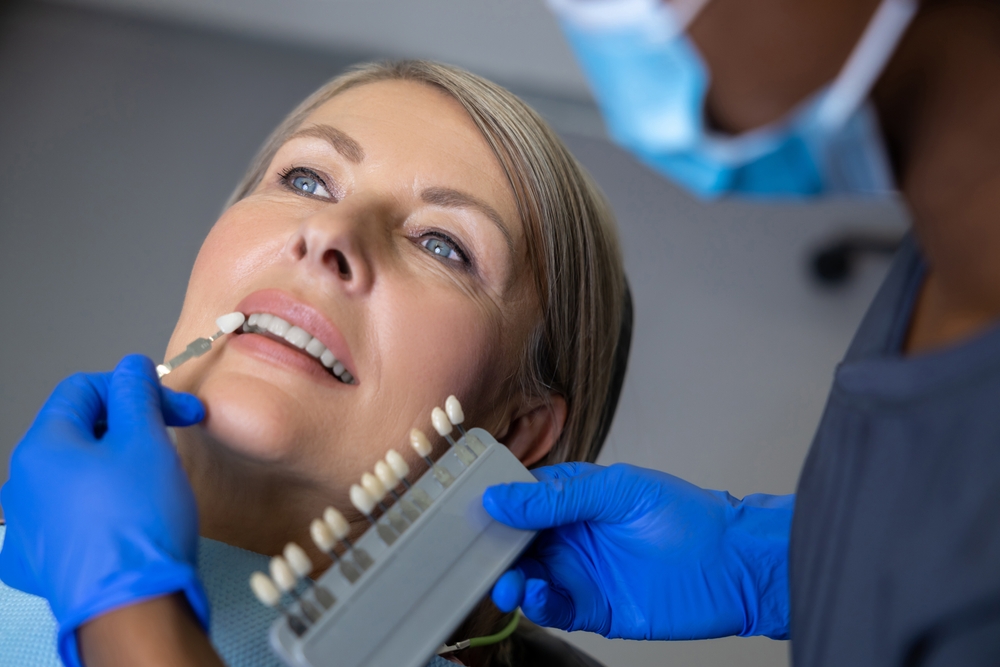
When the gums are healed, the dentist or a prosthodontist will make an impression of your mouth. These will be used to make realistic-looking artificial teeth. The crown will not be put in place until the jawbone is sufficiently strong to support using it.
If you’ve got a single dental implant, the doctor might make the crown, but multiple teeth will typically require custom-made bridges or dentures. The replacement teeth will be designed to match the color, shape and size of your remaining natural teeth.
The replacement teeth can be fixed or removable. Fixed artificial teeth cannot be removed for sleep or cleaning and every crown is attached to its own implant. An implant is strong and it can support several crowns if they’re bridged together.
A removable implant is like a denture that’s mounted on a frame that’s attached to the abutment. The tool is secured in-place, but it can be removed for cleaning or repairs.
When you’re ready, the doctor will attach the replacement teeth to the abutments. After this, they can be treated like regular teeth, you can brush them and floss between them. During regular checkups and cleanings they will be treated in a similar way. There will be follow-up visits to evaluate how the implants are working.
Step 7: Aftercare
The dental implant surgery may take place at one stage or more if you have multiple teeth to replace or other complications to overcome. An infection can cause delays until it’s overcome and the implants need time to fuse with the jawbone. At each stage during this process, there may be sources of discomfort, such as minor bleeding, pain around the implant site, facial bruising, swollen gums and more.
Pain can often be managed with ibuprofen which is also an anti-inflammatory which can help with swelling. An infection may require a course of antibiotics to clear up and you may have stitches in your gum.
The surgeon will usually use dissolving stitches that will clear up on their own with the passage of time. The area around the surgery site will be tender for a few days and you should avoid strenuous activity and stick to soft foods. If any of the aforementioned complications persists or worsens after the surgery, contact your doctor.
How Long Will it Take to Get My Dental Implant?
As you can see, this is a complex process and there are a number of variables to consider. The implant technique, the condition of your jawbone, your dental and medical history, the implant materials and many other factors will determine the length of the treatment.
Each step could take a few weeks up to a few months and complications from infections or taking fresh 3D images or X-rays can extend the time. A complex dental implant procedure involving multiple replacement teeth could take up to a year to finish!
What is Bone Grafting?
If your jawbone is too soft or insufficiently thick to support a dental implant, you may be asked to consider bone grafting. When we bite and chew, it creates a great deal of pressure on the jawbone and if that bone is weak the implant can fail. Bone grafting can be used to make a solid implant base using a natural or synthetic bone graft.
A natural graft can be taken from another bone in your body or an animal or human donor source. A synthetic bone graft usings a bone-substitute material that can support fresh bone growth in your jawbone. Your dental professional can advise you on the best option to suit your needs.
If you need a bone graft, it can take several months for the transplant to grow sufficient new bone to support the implant. If minor bone grafting is required, this may be done at the same time as your dental implant surgery. The determining factor is the strength and condition of your jawbone.
3 Simple Tips to Maintain Dental Implants
A dental implant can last from 10-30 years depending on a wide variety of factors. But, you can make them last towards the upper end of that range if you follow these three simple maintenance tips.
Avoid Damage
Hard candy, ice and other materials can break your natural teeth and artificial crowns. If you’re grinding your teeth get some treatment to limit the potential for damage. Limit your intake of caffeine and tooth-staining tobacco to keep your implants the same color as your natural teeth.
Regular Cleaning
Brush and floss your teeth regularly using an interdental brush that can slide between the gaps. Keep the nooks and crannies around your teeth, gums and implants clean from food debris to keep your mouth clean and healthy.
Schedule Checkups
Regular dental checkups should be scheduled to ensure that your natural and artificial teeth are clean and working as intended.
FAQs
What Are the Advantages of Implants?
When a permanent tooth or multiple teeth are lost due to gum disease or dental decay, they can be replaced with new artificial teeth. A dental implant can last up to 30 years and you can still eat the foods you like.
The foundations of the implants are made from ultra-strong titanium which has fused with the jawbone. A dental implant cannot decay, but it must still be kept clean and checked regularly to ensure that it’s in great shape.
What Are the Disadvantages of Implants?
Any oral surgical procedure carries with it a risk of pain, inflammation and infection. The human mouth is a breeding ground for germs and bacteria which can exacerbate the situation. There must be sufficient jawbone to house the implant or bone and gum grafting may be necessary. This can significantly increase the treatment costs, but most people are happy with the results.
Am I a Good Candidate for a Dental Implant procedure?
Most people that are missing one or more or even all their teeth are viable candidates for dental implants. But, there are exceptions, the best advice is to talk to your doctor and/or prosthodontist and they will be happy to explore the options with you.
Can I Have Metal-Free Dental Implants?
No, the tooth replacement material contains metal ions and the implants and posts are made from a titanium alloy. There is no such thing as a metal-free implant, but these materials are biocompatible and titanium allergic reactions are incredibly rare. To put your mind at ease, similar titanium alloys are used in shoulder, knee and hip implants.